Hidden Valley Wines: A Cellar Reinvented in Stellenbosch
Hidden Valley Wines: A Cellar Reinvented in Stellenbosch
Hidden Valley Wines: A Cellar Reinvented in Stellenbosch
Hidden Valley Wines: A Cellar Reinvented in Stellenbosch
Food and Wine
Food and Wine

On the slopes of the Helderberg, granite soil and a gravity fed cellar shape wine unlike anywhere else in the valley.
On the slopes of the Helderberg, granite soil and a gravity fed cellar shape wine unlike anywhere else in the valley.
On the slopes of the Helderberg, granite soil and a gravity fed cellar shape wine unlike anywhere else in the valley.
Author
Author
Author
Tom Clark
Tom Clark
Tom Clark
Photography
Photography
Photography
Hidden Valley Wines
Hidden Valley Wines
Hidden Valley Wines
Walk the top block at Hidden Valley in late afternoon and the wind off False Bay reaches you before anything else does, cool and salted, moving through vines planted in soil so decomposed it crumbles to powder in the hand. This is old granite, broken down over millennia into deep red earth, sitting two hundred and sixty nine metres above the sea, high enough that the Cabernet ripens slowly and the Sauvignon Blanc keeps its nerve.
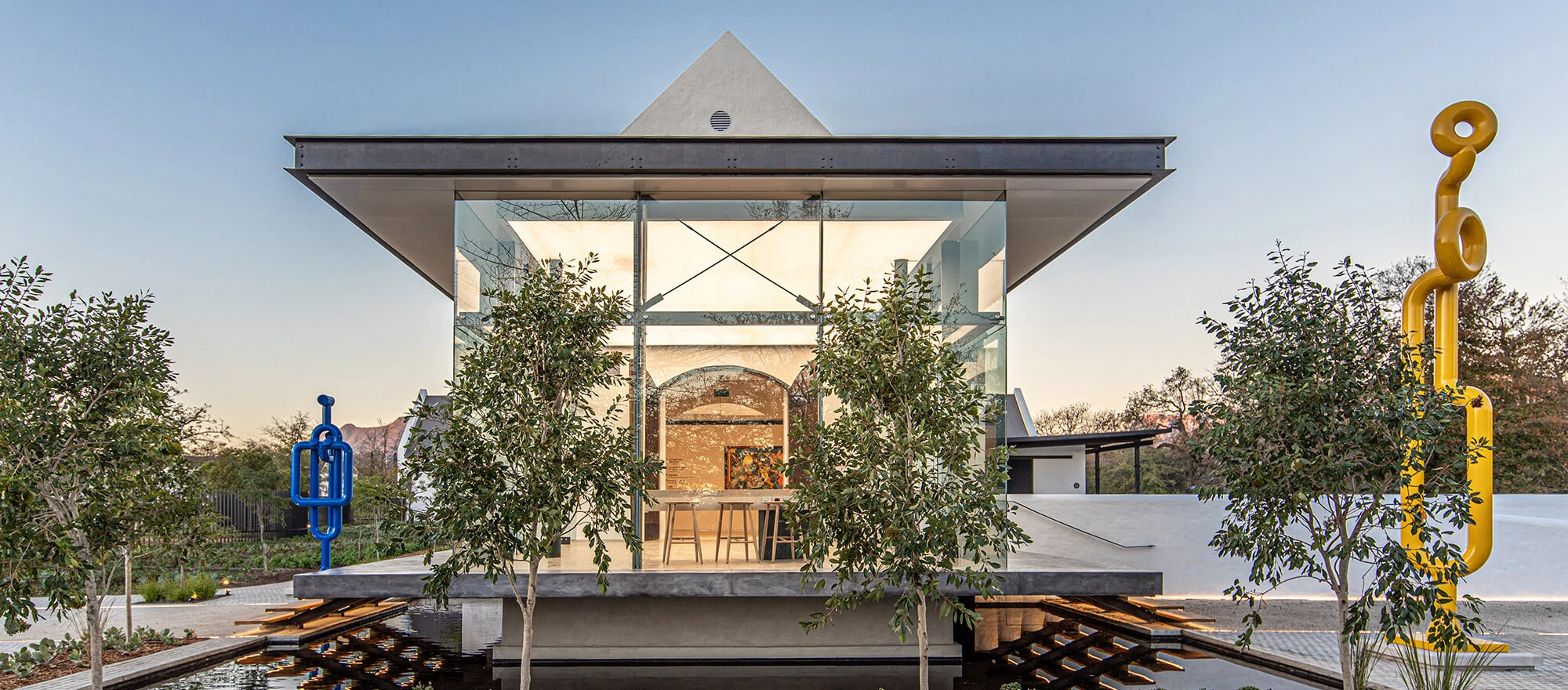
Below the vines, built low into the hillside so it barely interrupts the slope, sits the cellar where all of this becomes wine. Gravity does the work that pumps do elsewhere, unhurried, the way the estate prefers it.


Gravity does the work that pumps do elsewhere, unhurried, the way the estate prefers it.
Gravity does the work that pumps do elsewhere, unhurried, the way the estate prefers it.
Dave Hidden planted the first vines here in 2002, on land a Stellenbosch University professor had told him decades earlier was among the finest vineyard sites in the country. The soil explains why: ancient granite, broken down into Oakleaf and Tukulu profiles, holds water without drowning the vine, while the sea breeze off False Bay slows ripening enough that the reds finish with structure rather than heat. Cabernet Sauvignon and Shiraz carry the estate, joined by Petit Verdot and Tannat in smaller measure, while Sauvignon Blanc and Viognier take the cooler ground. Annalie van Dyk, who has made wine in Napa and the Loire, keeps to a non interventionist style the estate calls Less is More, a philosophy simple to say and harder to hold to. It shows in Hidden Secret, a Shiraz led blend of dark fruit and pepper, and in Hidden Gems, softer and more floral on Cabernet Sauvignon and Petit Verdot.
The farm changed hands in 2022, bought by mining magnate Patrice Motsepe, making Hidden Valley one of a still small number of Black owned wine estates in a region where land ownership has historically run the other way. The estate has spent much of the past year in quiet renovation. What has not changed is the reason to come here in the first place. On our Winelands Curated Tour, this is the stop built around exactly that, wine in hand, the mountain behind it.
The wines built to travel are the sparkling ones, a Brut and a Brut Rosé made in the traditional method, patient with their second fermentation the way the cellar is patient with everything else. Taste them on the tasting terrace with the valley falling away below and there is little need to say more about the place than the glass already has.
Our Winelands Curated Tour brings you here after a morning in Stellenbosch's historical streets and the Rupert Museum, before an afternoon at La Motte and a tasting at Noble Hill. The new restaurant on the property, built around chef Bjorn Guido's fermentation led cooking, gives the day its final course. Few days in the Cape move this cleanly from soil to glass to plate.
Link: Hidden Valley Wines
Dave Hidden planted the first vines here in 2002, on land a Stellenbosch University professor had told him decades earlier was among the finest vineyard sites in the country. The soil explains why: ancient granite, broken down into Oakleaf and Tukulu profiles, holds water without drowning the vine, while the sea breeze off False Bay slows ripening enough that the reds finish with structure rather than heat. Cabernet Sauvignon and Shiraz carry the estate, joined by Petit Verdot and Tannat in smaller measure, while Sauvignon Blanc and Viognier take the cooler ground. Annalie van Dyk, who has made wine in Napa and the Loire, keeps to a non interventionist style the estate calls Less is More, a philosophy simple to say and harder to hold to. It shows in Hidden Secret, a Shiraz led blend of dark fruit and pepper, and in Hidden Gems, softer and more floral on Cabernet Sauvignon and Petit Verdot.
The farm changed hands in 2022, bought by mining magnate Patrice Motsepe, making Hidden Valley one of a still small number of Black owned wine estates in a region where land ownership has historically run the other way. The estate has spent much of the past year in quiet renovation. What has not changed is the reason to come here in the first place. On our Winelands Curated Tour, this is the stop built around exactly that, wine in hand, the mountain behind it.

The wines built to travel are the sparkling ones, a Brut and a Brut Rosé made in the traditional method, patient with their second fermentation the way the cellar is patient with everything else. Taste them on the tasting terrace with the valley falling away below and there is little need to say more about the place than the glass already has.
Our Winelands Curated Tour brings you here after a morning in Stellenbosch's historical streets and the Rupert Museum, before an afternoon at La Motte and a tasting at Noble Hill. The new restaurant on the property, built around chef Bjorn Guido's fermentation led cooking, gives the day its final course. Few days in the Cape move this cleanly from soil to glass to plate.
Link: Hidden Valley Wines


Continue Reading
Continue Reading
Continue Reading


Are you an aesthetic explorer?
Get our newsletter and explore the world with us
©aēsplore . 2026
we the aesthetic explorers
Are you an aesthetic explorer?
Get our newsletter and explore the world with us
©aēsplore . 2026
we the aesthetic explorers
Are you an aesthetic explorer?
Get our newsletter and explore the world with us