Rupert Museum: Modern South African Art in Stellenbosch
Rupert Museum: Modern South African Art in Stellenbosch
Rupert Museum: Modern South African Art in Stellenbosch
Rupert Museum: Modern South African Art in Stellenbosch
Art
Art
Anton Rupert built a fortune worth billions, then his wife turned five decades of collecting into a museum that costs nothing to enter.
Anton Rupert built a fortune worth billions, then his wife turned five decades of collecting into a museum that costs nothing to enter.
Anton Rupert built a fortune worth billions, then his wife turned five decades of collecting into a museum that costs nothing to enter.
Author
Author
Author
Tom Clark
Tom Clark
Tom Clark
Photography
Photography
Photography
Rupert Museum / Adam Letch
Rupert Museum / Adam Letch
Rupert Museum / Adam Letch
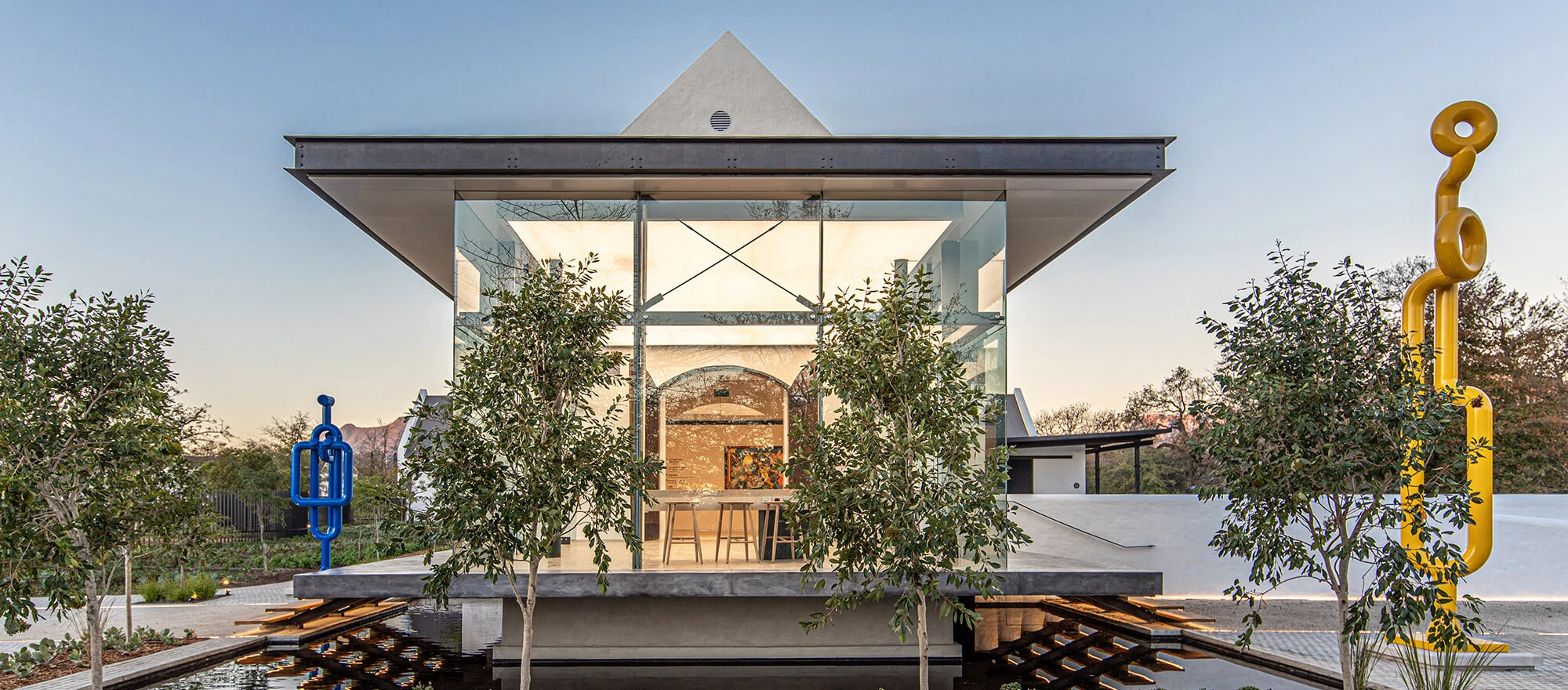
You do not arrive at the Rupert Museum through history, you arrive through glass. The entrance is a wall of it, floor to ceiling, pulling the vineyard light in and letting the white walls of the old Boland farmhouse show through from outside, so the building feels like something you could walk straight through rather than into. The Ruperts have spent recent years opening up what was, in the architects' own words, an imposing and slightly intimidating building.
Stellentia Road runs along the Eerste River on the edge of Stellenbosch's historic core, vineyards and oak trees on one side, the museum's low white walls on the other. Walk through that glass and you are standing inside one family's collection built up over fifty years, arranged the way Huberte Rupert always wanted it, close and unhurried, without a velvet rope in sight.


You do not arrive at the Rupert Museum through history, you arrive through glass.
You do not arrive at the Rupert Museum through history, you arrive through glass.
Anton and Huberte Rupert began collecting in the early 1940s, decades before either had the means most people associate with serious collecting. Anton, who later built an industrial fortune from a business started with ten pounds, kept buying South African art as his means grew, guided less by market fashion than by his own eye. The collection eventually ran to hundreds of works, among them Pierneef's ochre landscapes, Irma Stern portraits, and pieces by Maggie Laubser, Walter Battiss, Alexis Preller, and the sculptor Anton van Wouw.
The museum itself exists because of a fire at the Ruperts' home. Afterward, Huberte decided the collection needed a purpose built place of its own, something intimate rather than grand. She commissioned the building in 2003, and it opened on this site in February 2005, low and whitewashed, shaped by the same Boland farmhouse grammar as the wine estates around it. Inside the café, tucked past the new glass foyer, sits a small piece of someone else's history, a rock fireplace salvaged from Vladimir Tretchikoff's Bishopscourt sitting room before his house was demolished, warming a corner of the room where visitors now order coffee instead of a fire.
What I like about bringing guests here on our Winelands Curated Tour, usually as the second stop of the day, is the scale. Nobody gets museum fatigue in three rooms. You leave still curious, which is exactly the state you want people in before an afternoon of wine and architecture.
The Rupert Museum is a stop on our Winelands Curated Tour, alongside La Motte, Hidden Valley, and Noble Hill, though I would send a guest here on its own if a morning was all they had. Entry is free, and the museum runs small guided walkabouts worth timing a visit around. What we add is context, how a private collection like this one sits against the larger story of South African modernism, and why a Boland farmhouse holds European sculpture and a Tretchikoff fireplace without feeling like a contradiction.
Anton and Huberte Rupert began collecting in the early 1940s, decades before either had the means most people associate with serious collecting. Anton, who later built an industrial fortune from a business started with ten pounds, kept buying South African art as his means grew, guided less by market fashion than by his own eye. The collection eventually ran to hundreds of works, among them Pierneef's ochre landscapes, Irma Stern portraits, and pieces by Maggie Laubser, Walter Battiss, Alexis Preller, and the sculptor Anton van Wouw.
The museum itself exists because of a fire at the Ruperts' home. Afterward, Huberte decided the collection needed a purpose built place of its own, something intimate rather than grand. She commissioned the building in 2003, and it opened on this site in February 2005, low and whitewashed, shaped by the same Boland farmhouse grammar as the wine estates around it. Inside the café, tucked past the new glass foyer, sits a small piece of someone else's history, a rock fireplace salvaged from Vladimir Tretchikoff's Bishopscourt sitting room before his house was demolished, warming a corner of the room where visitors now order coffee instead of a fire.
What I like about bringing guests here on our Winelands Curated Tour, usually as the second stop of the day, is the scale. Nobody gets museum fatigue in three rooms. You leave still curious, which is exactly the state you want people in before an afternoon of wine and architecture.

The Rupert Museum is a stop on our Winelands Curated Tour, alongside La Motte, Hidden Valley, and Noble Hill, though I would send a guest here on its own if a morning was all they had. Entry is free, and the museum runs small guided walkabouts worth timing a visit around. What we add is context, how a private collection like this one sits against the larger story of South African modernism, and why a Boland farmhouse holds European sculpture and a Tretchikoff fireplace without feeling like a contradiction.


Continue Reading
Continue Reading
Continue Reading


Are you an aesthetic explorer?
Get our newsletter and explore the world with us
©aēsplore . 2026
we the aesthetic explorers
Are you an aesthetic explorer?
Get our newsletter and explore the world with us
©aēsplore . 2026
we the aesthetic explorers
Are you an aesthetic explorer?
Get our newsletter and explore the world with us