La Motte Estate: Art and Wine in Franschhoek
La Motte Estate: Art and Wine in Franschhoek
La Motte Estate: Art and Wine in Franschhoek
La Motte Estate: Art and Wine in Franschhoek
Architecture
Architecture

La Motte answers three centuries of history by keeping it working: the cellar still pours, the gallery still turns, and the artists keep coming.
La Motte answers three centuries of history by keeping it working: the cellar still pours, the gallery still turns, and the artists keep coming.
La Motte answers three centuries of history by keeping it working: the cellar still pours, the gallery still turns, and the artists keep coming.
Author
Author
Author
Tom Clark
Tom Clark
Tom Clark
Photography
Photography
Photography
Tom Clark & La Motte Estate
Tom Clark & La Motte Estate
Tom Clark & La Motte Estate
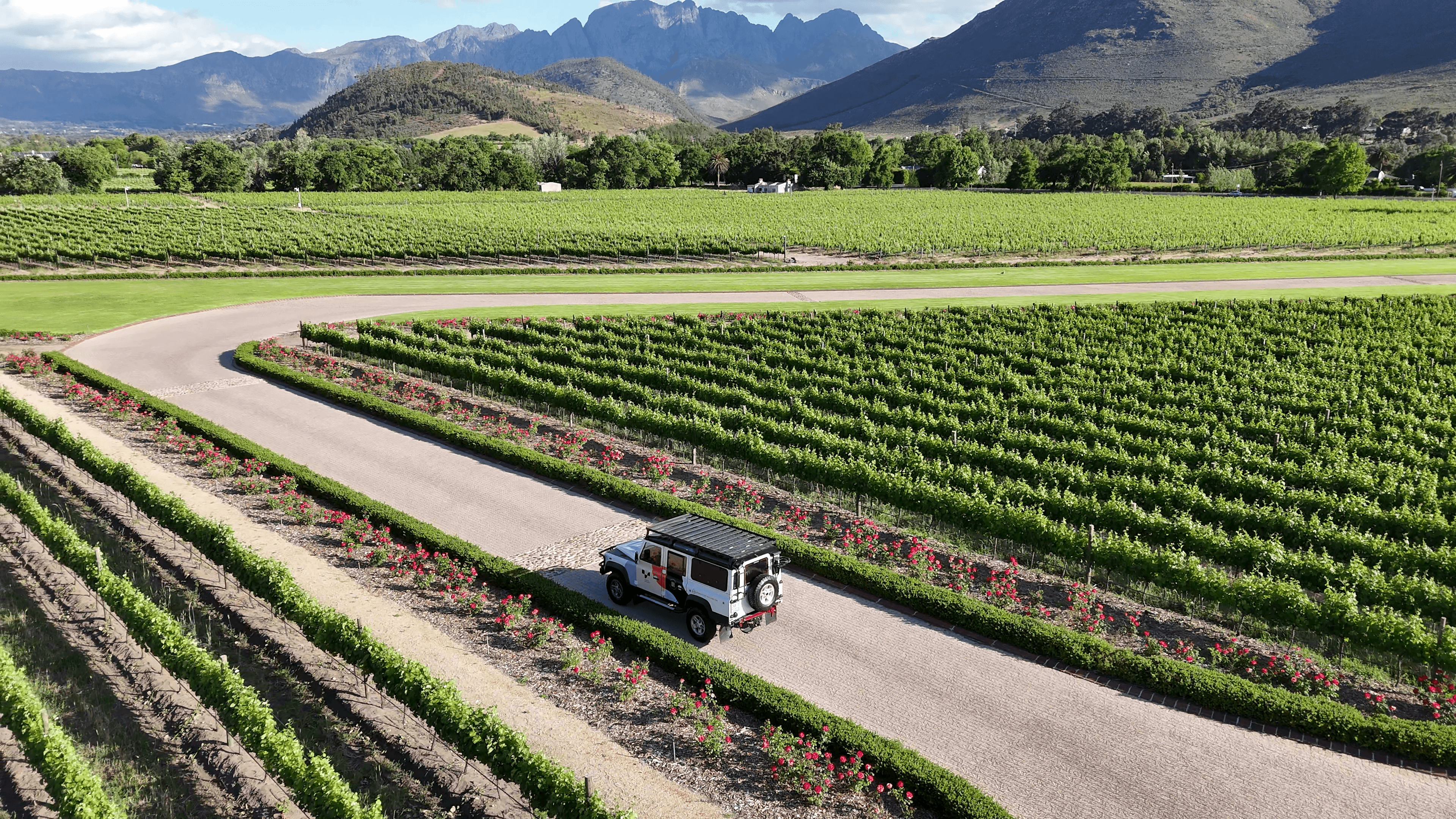
The Franschhoek valley opens without warning, mountains stacking on either side of the road until the vineyards fill every remaining space. La Motte's entrance keeps this feeling going a moment longer. The oak-lined avenue that once carried visitors to the manor is closed to traffic now, kept for looking rather than driving, so the road in runs alongside it instead, past open lawn, vine rows and the Klein Drakenstein peaks, before delivering you at reception.
Inside, the entrance foyer holds a permanent installation: a single rose, hung from the ceiling in tiers of petal and shadow, the work of Heike Taschner Jeske, whose father bred the deep coral rose that lines the estate's driveway and carries the family's name. It is not a subtle arrival, and La Motte rarely aims to be.
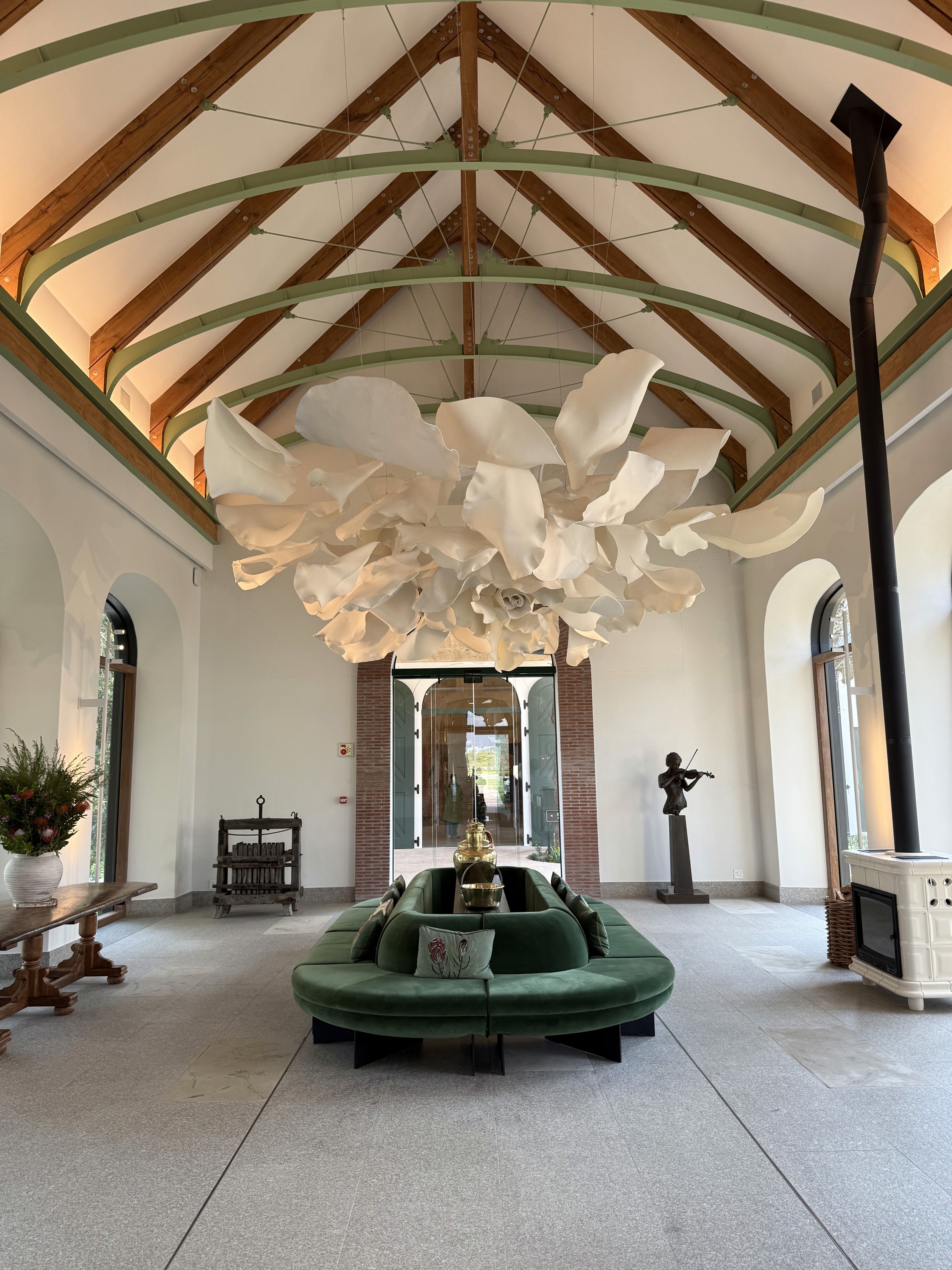
"The entrance foyer holds a single rose, permanently hung from the ceiling in tiers of petal and shadow."
"The entrance foyer holds a single rose, permanently hung from the ceiling in tiers of petal and shadow."
The estate's shape was set long before the Rupert family arrived. Land here was granted to the German settler Hans Hendrik Hattingh in 1695 and bought fourteen years later by the French Huguenot Pierre Joubert, who named it for La Motte d'Aigues, the Provençal village of his birth. Vines went into the ground in 1752, and the Historic Cellar, dated 1782 and now a provincial monument, still holds vats lettered with the names of the Huguenot families who first worked this soil.
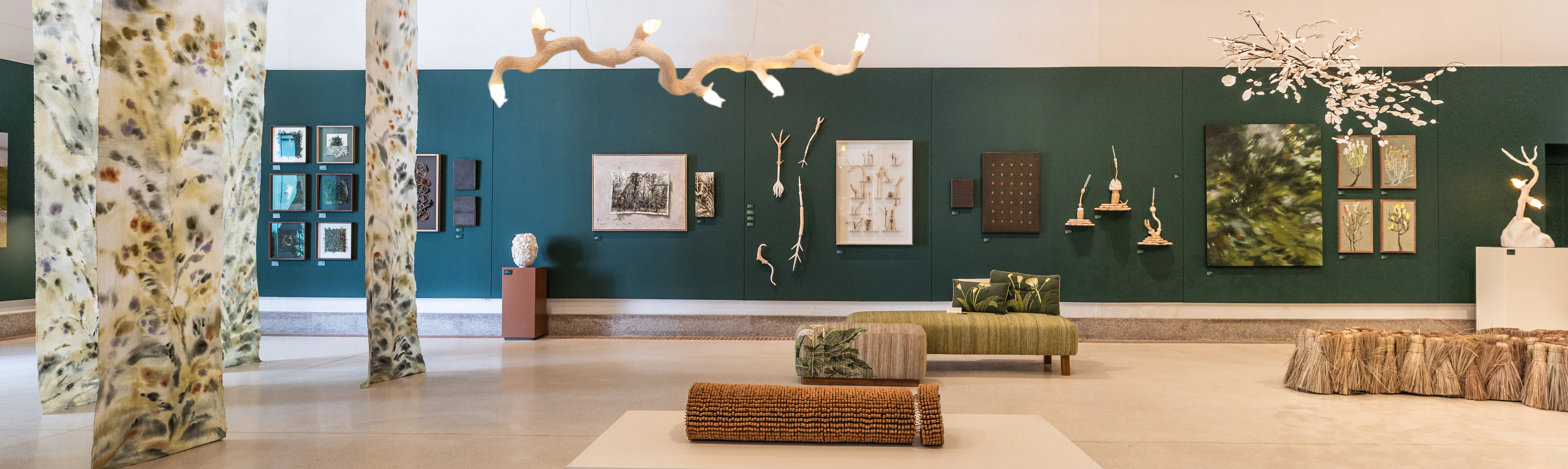
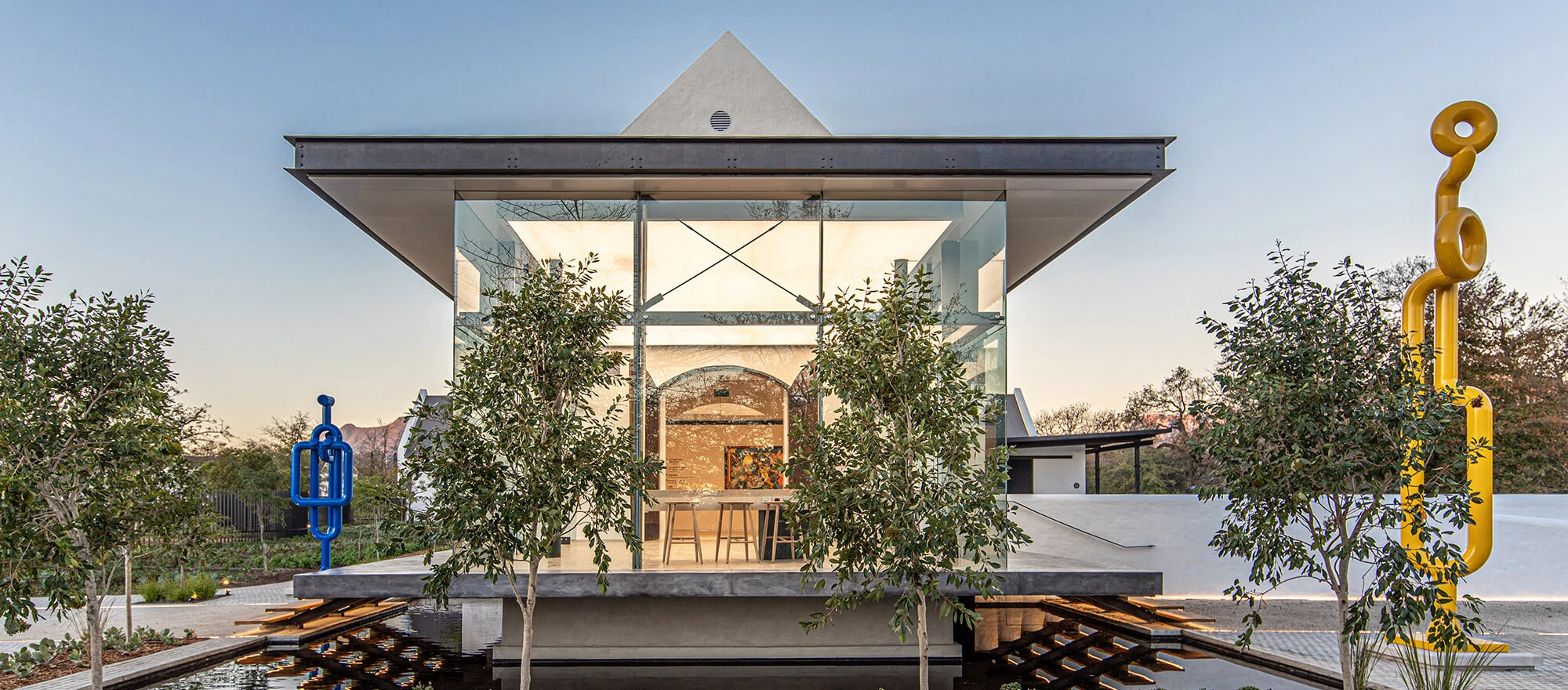
Dr Anton Rupert bought La Motte in 1970 and began the restoration that shaped what exists today. His daughter, Hanneli Rupert-Koegelenberg, now runs the estate with her husband Hein Koegelenberg, and her touch is visible wherever art appears here, from the sculptures commissioned along the drive to the gallery she keeps in near constant rotation, an instinct inherited from her parents, who founded the Rupert Art Foundation in 1964. The current show, Among the Trees, gathers twelve South African artists working in ceramics, textiles, sound and paint around the pause between winter and spring, among them Chloë Wallace, who presses leaves and insect wings into porcelain, and Conrad Oosthuizen, whose accompanying work turns botanical data into sound. Toby Megaw's four-metre Wine Bearer meets you as you drive in, the first of nine sculptures scattered across the property.
La Motte rewards unhurried attention. The old cellar still pours, the Ateljee still turns its rooms over to new work each season, and the bread still comes out of a wood-fired oven built in France. Few estates in the Winelands hold this much at once without losing their calm, and fewer still make it feel unforced. Both our Hidden Winelands and Winelands Curated tours stop here, or we can build a custom day around it entirely.
To experience La Motte with us, enquire here.
The estate's shape was set long before the Rupert family arrived. Land here was granted to the German settler Hans Hendrik Hattingh in 1695 and bought fourteen years later by the French Huguenot Pierre Joubert, who named it for La Motte d'Aigues, the Provençal village of his birth. Vines went into the ground in 1752, and the Historic Cellar, dated 1782 and now a provincial monument, still holds vats lettered with the names of the Huguenot families who first worked this soil.
Dr Anton Rupert bought La Motte in 1970 and began the restoration that shaped what exists today. His daughter, Hanneli Rupert-Koegelenberg, now runs the estate with her husband Hein Koegelenberg, and her touch is visible wherever art appears here, from the sculptures commissioned along the drive to the gallery she keeps in near constant rotation, an instinct inherited from her parents, who founded the Rupert Art Foundation in 1964. The current show, Among the Trees, gathers twelve South African artists working in ceramics, textiles, sound and paint around the pause between winter and spring, among them Chloë Wallace, who presses leaves and insect wings into porcelain, and Conrad Oosthuizen, whose accompanying work turns botanical data into sound. Toby Megaw's four-metre Wine Bearer meets you as you drive in, the first of nine sculptures scattered across the property.
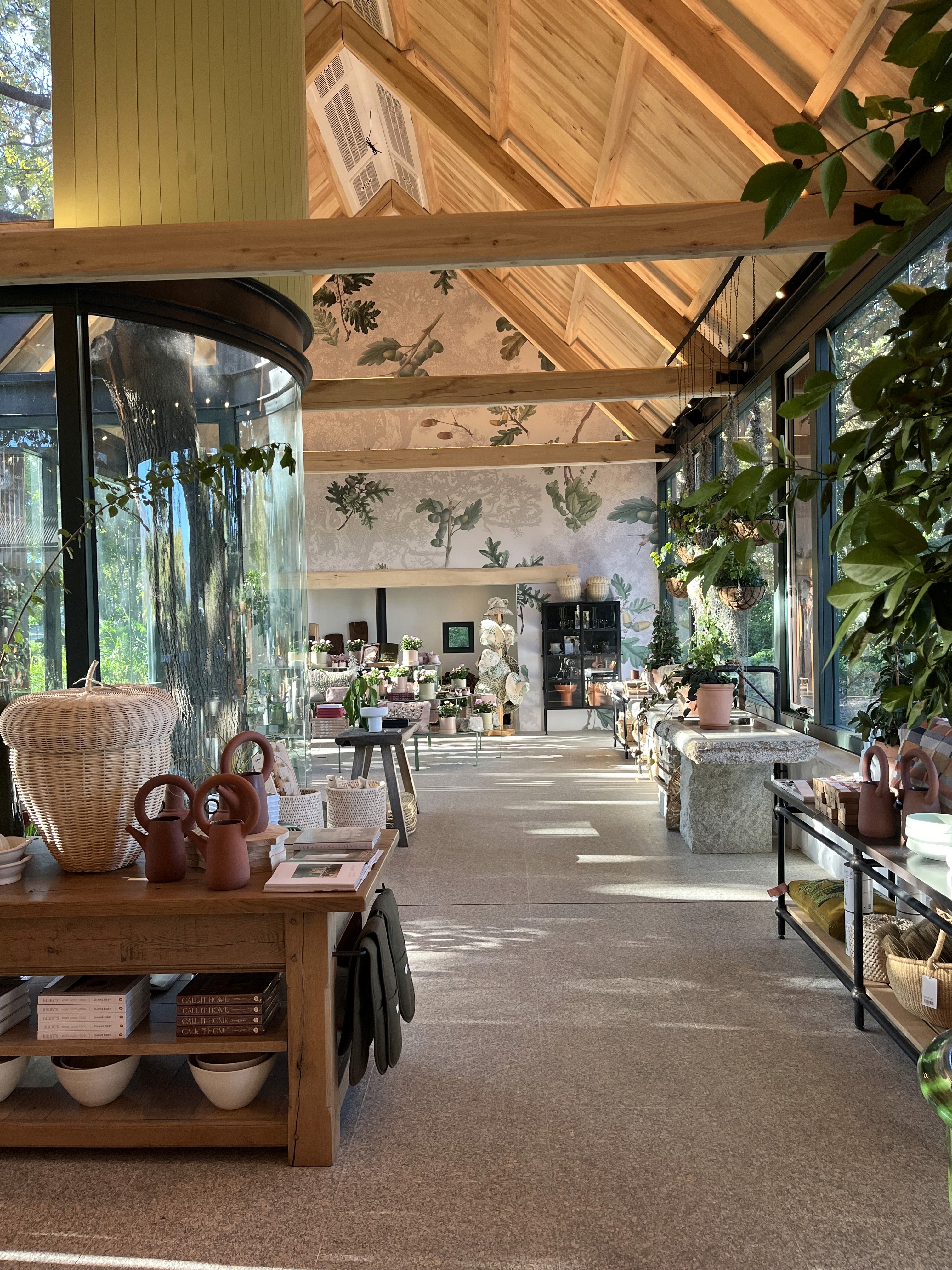
La Motte rewards unhurried attention. The old cellar still pours, the Ateljee still turns its rooms over to new work each season, and the bread still comes out of a wood-fired oven built in France. Few estates in the Winelands hold this much at once without losing their calm, and fewer still make it feel unforced. Both our Hidden Winelands and Winelands Curated tours stop here, or we can build a custom day around it entirely.
To experience La Motte with us, enquire here.

Continue Reading
Continue Reading
Continue Reading

Are you an aesthetic explorer?
Get our newsletter and explore the world with us
©aēsplore . 2026
we the aesthetic explorers
Are you an aesthetic explorer?
Get our newsletter and explore the world with us
©aēsplore . 2026
we the aesthetic explorers
Are you an aesthetic explorer?
Get our newsletter and explore the world with us